
Blog
2 February 2026
Social Activities for Elderly: Staying Connected, Engaged and Independent at Home
Many older Australians spend more time alone than they would like. Whether it’s because a partner has passed, driving has stopped, or health has made getting out harder, quiet days at home can gradually become the norm. And while that might seem manageable on the surface, social disconnection is one of the most significant threats to wellbeing in later life.
The good news is that staying connected doesn’t require a packed social calendar or leaving the house every day. Social engagement looks different for everyone, and it can be built gently, in ways that genuinely suit the person.
At Dovida, our home care services are designed to support older Australians to stay socially connected at home, working alongside families at every step.
Social activities for elderly people living at home
Everyday in-home social activities
Some of the most meaningful social moments happen without any formal planning. A familiar face, a shared cup of tea, or a conversation over a meal can do more for someone’s wellbeing than an organised outing ever could.
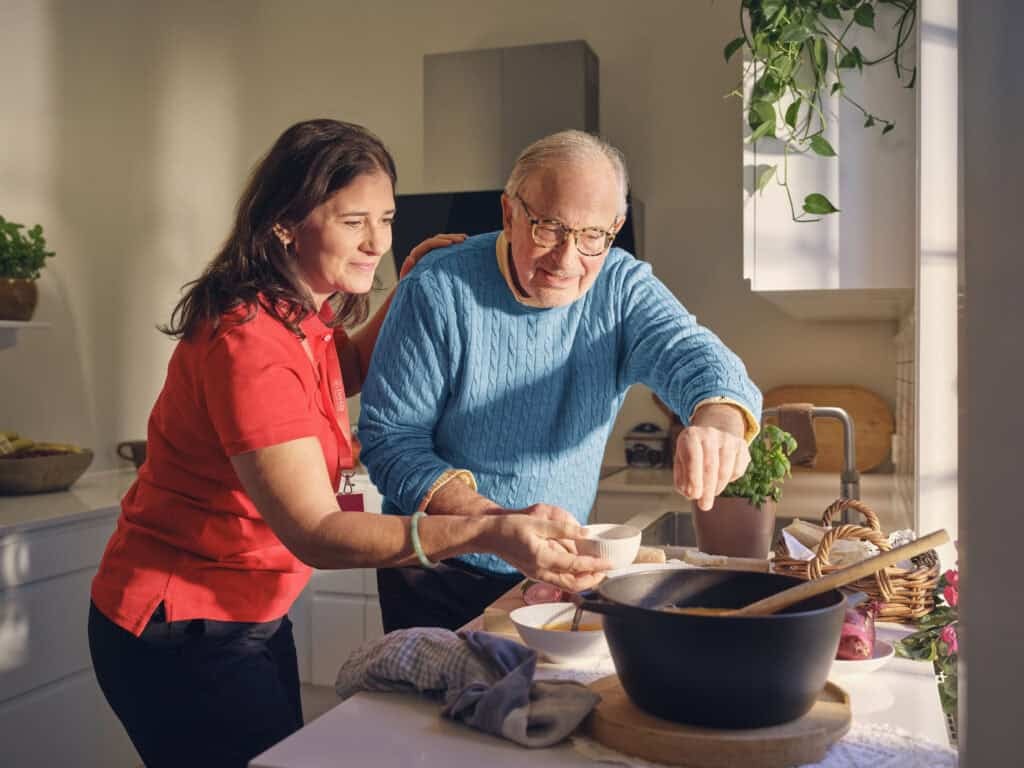
Simple activities that foster real connection at home include regular conversation and companionship, shared meals or morning tea, card games, board games and puzzles, cooking or baking together, light gardening, and looking through photo albums or listening to favourite music.
The activity itself is rarely the point. The connection that happens during it is what truly matters.
Social activities for elderly people with limited mobility
Limited mobility doesn’t mean limited connection. Low-energy activities can still provide rich, meaningful social engagement, including chair-based activities and gentle stretching, creative hobbies like drawing, knitting or craft, listening to music or exploring audiobooks together, and watching a favourite television program and discussing it afterwards.
For many older people, the comfort of familiar surroundings makes these activities even more enjoyable.
Social activities for elderly people with dementia
For someone living with dementia, busy group settings can sometimes cause confusion or anxiety. Activities that are sensory, familiar and calm tend to work best, including music from their era, familiar objects and scents that prompt positive memories, simple repetitive routines like sorting or folding, and one-on-one interaction rather than group settings.
A caregiver who knows the person well can gently guide and participate without pressure, making these moments far more accessible.
Community-based social activities for older Australians
Local council and community programmes
Local councils across Australia offer a wide range of free or low-cost programmes that are often underutilised simply because people don’t know they exist. It’s worth checking your local council’s website or noticeboard for seniors centres, library programmes and workshops, council-run exercise classes and outings, and activities during Seniors Week and local festivals.
Interest-based groups and volunteering
Shared interests are a powerful foundation for lasting friendships. Well-established options for older Australians include Men’s Sheds, the University of the Third Age (U3A), cultural or faith-based community groups, and hobby clubs for gardening, walking or arts.
Volunteering is another excellent way to stay socially active. Even light, flexible roles at a local library or community garden offer a sense of purpose and regular human connection that’s hard to replicate elsewhere.
Why social activities matter for older Australians
Social isolation and loneliness in later life
Social isolation and loneliness are related but not the same. Isolation refers to a lack of contact with others; loneliness is the feeling of being disconnected, even when others are present.
Older Australians are particularly at risk due to living alone after the loss of a partner, the gradual loss of friends through illness or bereavement, reduced mobility, and stopping driving. The emotional impact is real and can contribute to sadness, anxiety and withdrawal from things that once brought joy.
The health benefits of staying connected
Social connection is not a luxury. Regular social engagement supports mental health by improving mood and confidence, cognitive health by keeping the mind active and stimulated, physical health through movement and routine, and independence by supporting a person’s ability to continue ageing at home.
Common barriers to social activity and how to address them
Mobility and health conditions. Arthritis, chronic pain and fatigue are among the most common reasons older people withdraw from social activities. Adaptation is key. Arthritis home care can support people to remain active and engaged despite these challenges.
Loss of transport. Stopping driving can significantly reduce social contact, particularly in regional and suburban Australia. Elderly transport services can help, accompanying older people to appointments, outings and community events safely and reliably.
Dementia and cognitive changes. Familiarity, routine and trusted people are essential. Activities that feel safe and predictable, delivered by a consistent caregiver, can make all the difference.
Grief and loss of confidence. Bereavement can quietly shrink a person’s social world. Encouragement needs to be patient, gentle and completely free of pressure.
How families can help without adding pressure
Families often feel guilt or frustration when a loved one withdraws socially. It’s worth knowing that resistance is common and is not a failure on anyone’s part.
A few approaches that tend to help: start with something small rather than a full schedule, involve the older person in every decision so the activity feels chosen rather than imposed, respect their preferences even when that means quieter days, and accept hesitation as a normal part of the process. Progress is rarely linear, and that’s completely okay.
How in-home care supports social connection
A caregiver’s regular visits can provide consistent companionship and gentle encouragement. Practical support might include companion care as part of everyday visits, assistance with transport to community activities, and collaboration with families and healthcare professionals.
For those with more complex needs, 24-hour home care ensures support is available around the clock. Our home help care service also frees up time and energy so more of the day can be spent on things that bring real joy.
Dovida’s person-centred approach recognises social connection as an essential part of living well at home, always working alongside families to support what matters most.
If you’d like to find out more, visit dovida.com.au or call 1300 008 018.