
Blog
15 November 2025
Hospice Care at Home vs Inpatient: Which Is Right for Your Family?
Many people use these terms interchangeably, but there are important differences. Palliative care focuses on comfort and quality of life for anyone living with a serious illness, regardless of prognosis. It can begin at diagnosis and continue alongside treatments aimed at curing or managing the illness.
Hospice care is a specialised form of palliative care provided when someone has a life-limiting illness with a prognosis of approximately six months or less, and when the focus shifts entirely to comfort rather than cure.
Both share the same compassionate goal: supporting physical comfort, emotional wellbeing, and dignity.
The distinction comes down to timing and intent. You might choose palliative care early in an illness journey to manage symptoms whilst pursuing other treatments. Hospice care becomes appropriate when the focus shifts to ensuring comfort, peace, and meaningful time with loved ones.
Understanding this difference helps you have clearer conversations with healthcare professionals about the support that aligns with your goals and values.
Palliative & Hospice Care at Home
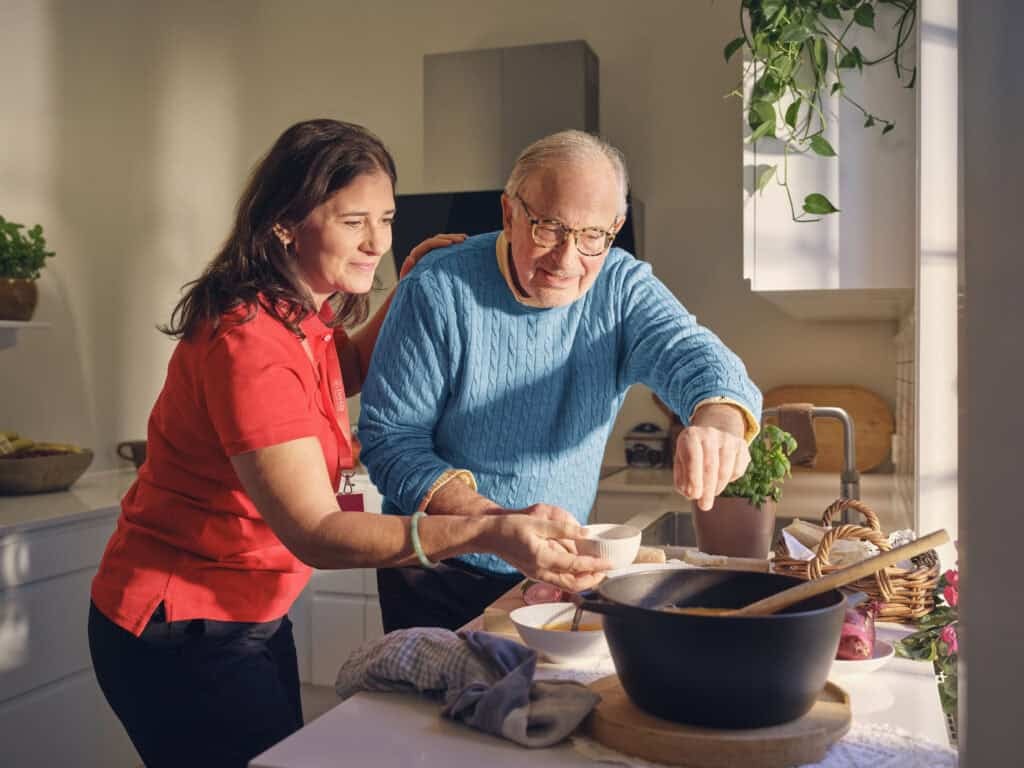
Receiving hospice or palliative care at home means you or your loved one stays in familiar surroundings whilst receiving professional support. Daily care typically involves visits from nurses, caregivers, and allied health professionals who work alongside family members. The care team manages symptoms, provides personal care support, and ensures medications and equipment are available when needed.
At home, care revolves around your routine, preferences, and what brings comfort. You remain surrounded by personal belongings, family photos, beloved pets, and the rhythms of everyday life. Professional caregivers coordinate with your doctor and specialists whilst family members participate as much or as little as feels right. This approach honours your autonomy and keeps you connected to the life you’ve built.
Who Decides When a Patient Is Ready for Hospice?
The decision to begin hospice care typically starts with a physician’s recommendation based on a terminal diagnosis and a prognosis of approximately six months or less.
However, this isn’t a decision made by doctors alone. You, your loved one, and family members play a vital role in these conversations.
Discussions usually involve your GP, specialists, and the person receiving care (when possible) along with family members or substitute decision-makers. Healthcare professionals provide medical guidance, but the ultimate decision rests with you and your family.
Signs that hospice may be appropriate include declining response to treatment, frequent hospitalisations, progressive symptoms, or simply a desire to shift focus from cure to comfort.
The decision fundamentally centres on ensuring dignity and comfort. It’s about honouring what matters most during this precious time. Healthcare teams can provide information and guidance, but only you can determine what aligns with your values, preferences, and goals for this stage of life.
Comparing Home vs Inpatient Hospice Care
To help clarify the key differences, here’s a direct comparison:
| Aspect | Home Hospice Care | Inpatient Hospice Care |
| Environment | Your own home with all its familiar comforts, memories, and personal belongings | Institutional facility with shared spaces and unfamiliar surroundings |
| Medical Support | Professional nurses and caregivers provide scheduled visits with 24/7 on-call support, can scale to round-the-clock care | Constant medical presence on hand |
| Family Involvement | Family remains actively involved in daily life and care, maintaining natural relationships | Family have limited involvement in care. Family presence may be subject to visiting hours |
| Comfort & Familiarity | Complete comfort in your own space with your routines, possessions, pets, and independence | Community living setting with facility schedules and possible reduced personal autonomy |
| Symptom Management | Professional symptom management with specialist equipment and medications delivered to your home | Immediate intervention available |
| Flexibility | Complete flexibility – care adapts entirely to your preferences, schedule, and way of life | Routines follow facility schedules and requirements |
| Personal Autonomy | You maintain complete control over your environment, routines, visitors, and daily decisions | Reduced autonomy with facility practices governing daily life |
| Privacy & Dignity | Complete privacy in your own home with dignity of your own space | Some shared spaces and staff presence may limit privacy |
| Emotional Wellbeing | Research shows reduced anxiety and greater peace in familiar surroundings | Being away from home during vulnerable time can increase emotional distress |
| Family Connections | Natural, meaningful time with loved ones in comfortable, familiar setting | Visitation hours can determine frequency or duration of family visits |
| Funding Considerations | Flexible options with government support available, can be more cost-effective | Costs vary. Often higher costs in private facilities |
Making the Right Choice for Your Family
For most families, home-based hospice care offers the most meaningful and dignified experience.
The question often isn’t “should we choose home care?” but rather “how can we make home care work for us?”
With proper support from experienced providers, the vast majority of people can receive excellent hospice care at home, even with complex medical needs.
Consider what truly matters during this precious time. Is it the comfort of familiar surroundings? The ability to maintain routines and autonomy? Natural, unrestricted time with family?
For most people, these elements far outweigh concerns about managing practical aspects of care, particularly when professional support handles the clinical complexities.
Inpatient care typically becomes necessary only in specific circumstances: when symptoms genuinely cannot be managed at home despite professional support, when there’s no family or support network available to participate in care, or when the home environment itself presents insurmountable barriers. Even then, it’s worth exploring whether enhanced home support could address these challenges before defaulting to facility-based care.
Dovida’s Palliative & Hospice Care at Home
At Dovida, we believe that everyone deserves the opportunity to spend their final chapter at home, surrounded by what’s familiar and loved. Our mission is to make home-based hospice and palliative care not just possible, but truly meaningful for you and your family.
We remove the barriers that might otherwise push families toward facility-based care. Our experienced Care Managers coordinate every aspect of your clinical care, working alongside your medical team to ensure seamless symptom management. Our caregivers receive specialised palliative care training, equipping them with the expertise to handle complex needs with both clinical skill and genuine compassion.
Importantly, we’re flexible and responsive. We can provide care from a few hours daily to complete round-the-clock support, scaling up or down as your needs change. Our live-in care model can also provide a constant caregiver presence in your home, ensuring peace of mind.
We also provide respite support for family caregivers, recognising that caring for loved ones during this time requires its own support.
Many families assume they “can’t manage” home care, but with Dovida’s comprehensive support, they discover not only that it’s possible, but that it brings unexpected meaning, closeness, and peace. We handle the clinical complexities so you can focus on what matters most: being present with your loved one in the comfort of home.
If you’re considering hospice care, we encourage you to explore how our palliative care services could support you. Let’s have a conversation about making home care work for your unique situation. Because at Dovida, we believe your final chapter deserves to be lived your way, in the comfort of home.