
Blog
2 February 2026
Ageing at Home vs Assisted Living in Australia: Which Is Right for You?
As Australians live longer, healthier lives, more families are navigating important decisions about where and how to age. Two of the most common options are remaining at home with support or transitioning into an assisted living facility or residential aged care.
There’s no universal “right” answer. The best choice depends on personal values, health needs, financial circumstances, family support, and future planning. What works beautifully for one person may not suit another, even within the same family.
Here’s an encouraging trend: a growing number of older Australians are choosing to stay at home longer, supported by community services and tailored home care services. Research consistently shows that nearly 90% of older Australians report wanting to age at home, and with the right support systems in place, this goal is increasingly achievable.
This article walks through the key factors to consider when comparing ageing at home vs assisted living, helping you make an informed decision that honours both practical needs and personal preferences.
Why This Decision Deserves Careful Planning
The choice between ageing at home and moving to assisted living affects quality of life, independence, safety, family dynamics, and financial security. It’s one of the most significant decisions many families will face.
Unfortunately, many people delay this conversation until a crisis occurs – after a fall, hospitalisation, or caregiver burnout – when options feel limited and decisions must be made quickly. This reactive approach often leads to outcomes that don’t fully reflect what the older person values most.
Early exploration of care options allows for thoughtful, values-based decisions. It provides time to:
- Assess current and anticipated future needs
- Explore funding options and financial implications
- Modify homes for safety and accessibility
- Trial different types of support
- Have meaningful conversations with family members
Both short-term needs and long-term goals should be considered together. What works today may need adjustment in six months or two years, and planning with flexibility in mind creates better outcomes for everyone involved.
Comparing Ageing at Home and Assisted Living
Let’s examine the key decision areas honestly and practically. It’s worth noting that many services traditionally associated with assisted living facilities can now be arranged at home – often with greater personalisation and flexibility.
Health and Safety
At home: Safety depends on home design, mobility, and support systems. While common risks include falls, isolation during emergencies, or medication errors, these can be effectively managed with the right approach.
Modern solutions include:
- Home modifications (grab rails, improved lighting, wheelchair ramps, stair lifts)
- Emergency alert systems and personal alarms with 24/7 monitoring
- Regular in-home health monitoring and telehealth options
- 24-hour home care or overnight home care when needed
- Coordination with GPs and specialists who can visit at home
Many families are surprised to discover just how comprehensive in-home safety measures have become. With proper planning, the home environment can be adapted to meet most health needs safely.
In assisted living: Safety features are built into the environment, with non-slip flooring, accessible bathrooms, and emergency call systems in every room. Trained staff are on-site 24/7 to respond to emergencies, though response times can vary depending on staffing levels and competing demands.
Consideration: Evaluate current risk factors honestly. With advances in home care technology and support services, the safety gap between home and facility care has narrowed significantly. Many people find that comprehensive in-home support provides comparable security whilst maintaining the comfort of familiar surroundings.
Independence and Personal Freedom
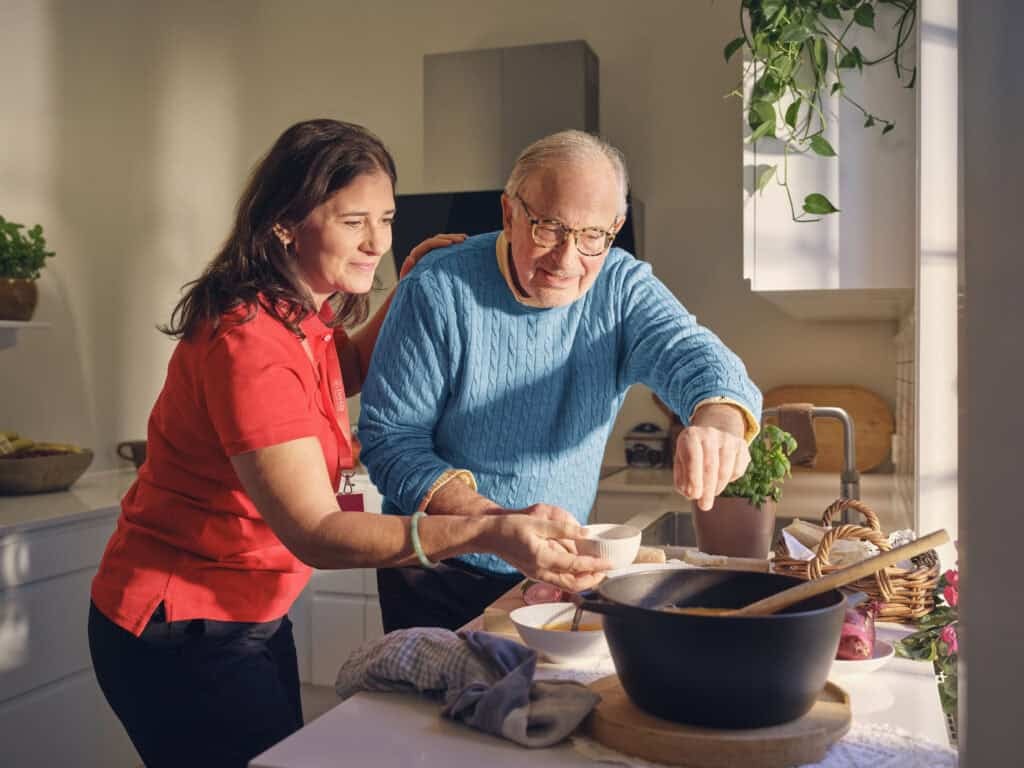
At home: Maintaining your own home offers complete autonomy over daily routines, meals, activities, sleep schedules, and visitors. You control when you wake up, what you eat, and how you spend your time. There are no institutional schedules to follow. Familiar surroundings support confidence, comfort, and a sense of identity that’s difficult to replicate elsewhere.
You can keep beloved pets, maintain your garden, have grandchildren visit whenever you like, and continue the routines that have brought comfort for decades.
In assisted living: Daily schedules tend to be structured around meal times, activity programs, and staff availability. Residents typically have less control over when meals are served, personal care routines, or use of communal spaces. Privacy can be reduced, particularly in shared accommodation. While activities are provided, participation follows the facility’s schedule rather than personal preference.
Consideration: Independence and quality of life are deeply connected. Research consistently shows that maintaining personal autonomy contributes significantly to emotional wellbeing and even physical health outcomes. Whilst some structure can be helpful, many older adults find that retaining control over their daily lives is worth the extra planning required for home care.
Social Connection and Emotional Wellbeing
At home: Older adults living alone may face isolation challenges, particularly if they can no longer drive or easily participate in community activities. However, this is increasingly addressable with intentional planning.
Solutions include:
- Companion care providing meaningful social interaction
- Transport to community centres, religious services, and social activities
- Technology for video calls with family and friends
- Day programs that provide structured social engagement
- Maintaining existing friendships and community connections
The advantage of ageing at home is that social connections can be maintained with lifelong friends, neighbours, and community groups – relationships built over decades that provide deep meaning and continuity.
In assisted living: Built-in opportunities for socialisation through group dining, games, exercise classes, and events. Regular interaction with staff and other residents can reduce isolation, though the depth of these new relationships varies. Some people thrive in this environment; others find it difficult to form meaningful connections later in life or prefer their existing social networks.
Consideration: Social needs are highly individual. For those with strong existing community ties, maintaining those connections at home often provides more meaningful social engagement than starting fresh in a facility environment. However, for those already isolated, both options require proactive effort to build connection.
Family Involvement and Caregiver Support
At home: Family members often play significant roles, though the level of involvement is flexible and can be supplemented with professional support. This allows families to focus on quality time and emotional connection rather than being consumed by care tasks.
Professional home care services can handle the demanding physical care, allowing adult children to remain children rather than becoming full-time carers. Many families report that bringing in professional support actually strengthened their family relationships by reducing stress and resentment.
Family caregiver burnout is real, but it’s not inevitable. With proper support systems, families can remain actively involved in meaningful ways whilst protecting their own wellbeing.
In assisted living: Family involvement typically shifts to visitor status. While this removes the burden of direct care, some families report feeling disconnected or less informed about day-to-day wellbeing. Visiting can feel more formal, and spontaneous interactions become scheduled events.
Consideration: The quality of family relationships often matters more than the quantity of care provided. Many families find that professional home care allows them to preserve the emotional closeness of their relationships whilst ensuring their loved one receives excellent care. The key is being realistic about capacity and bringing in support proactively rather than waiting for crisis.
Financial Costs and Funding
Home care: Costs vary based on the level and frequency of care required. Services can range from a few hours per week for light domestic help to comprehensive 24-hour home care for complex needs.
Government support is available through:
- Support at Home program (for those over 65)
- Commonwealth Home Support Programme
- Veterans’ affairs programs
Additional expenses may include home maintenance, modifications, and medical equipment. However, you retain the asset value of your home, which continues to appreciate. Many families find that even with comprehensive care, the total cost is comparable to or less than residential care whilst preserving the family home for future generations.
Assisted living / residential aged care: Involves multiple cost components including daily care fees, accommodation payments (refundable or daily), and means-tested care fees. Some facilities require significant upfront payments of $300,000–$550,000 or more. Most families need to sell the family home to afford these costs, losing both the asset and any future appreciation.
Ongoing daily fees can range from $150–$300+ per day depending on the level of care and location. These costs are ongoing regardless of how much care is actually used.
Consideration: When comparing costs, consider the full financial picture including asset retention. Many families find that even with substantial in-home care expenses, they’re financially better positioned by retaining the family home. Cost calculators show that except in the most intensive care situations, home care often provides better value whilst preserving assets for estates.
Benefits and Challenges of Each Option
Ageing at Home
Benefits:
- Maintains familiarity and emotional comfort in a known environment
- Complete control over personal routines, meal choices, and daily preferences
- Flexibility to increase or reduce care services as needs change
- Keeps connection to neighbourhood, community, and lifelong friends
- Preserves sense of identity and personal autonomy
- Often more affordable, especially in early to moderate care stages
- Retains family home as an asset
- Allows pets, personal belongings, and meaningful possessions
- Enables spontaneous family visits and grandchildren interactions
- Supports better sleep and reduced anxiety through environmental familiarity
Challenges:
- May require coordination of services (though many providers offer comprehensive management)
- Safety modifications may be needed initially
- Requires proactive planning for social engagement
How Dovida addresses these challenges: Our care plan management service coordinates all aspects of support, removing the burden of managing multiple providers. We offer everything from light home help care service to comprehensive 24-hour care, dementia support, and palliative care. Our Circle of Care approach brings together the individual, their family, and healthcare professionals to create seamless, evolving support that addresses every challenge while keeping people safely at home.
Assisted Living / Residential Aged Care
Benefits:
- 24/7 staff presence
- No home maintenance responsibilities
- Built-in social activities
Challenges:
- Loss of personal control over daily environment and routines
- Significant emotional adjustment to leaving home
- High upfront and ongoing costs
- Often requires selling the family home
- Potential for long waitlists in preferred facilities
- Reduced privacy, particularly in shared accommodation
- Institutional schedules and rules
- Difficulty maintaining existing friendships and community connections
- Limited personalisation of living space
- Restrictions on visitors, including timing and overnight stays
- Challenge of building meaningful new relationships later in life
- May feel like giving up independence even when not medically necessary
- Once admitted, returning home can be logistically difficult
Making the Right Decision for Your Situation
Consider both current needs and what support might be needed in 1–3 years. Circumstances change, and what works today should have room to evolve.
Practical steps to guide your decision:
- Conduct an aged care assessment: Contact My Aged Care (1800 200 422) to arrange an Aged Care Assessment Team (ACAT) assessment. This determines eligibility for government-funded services and helps identify appropriate support levels.
- Start with home care trials: Most families benefit from beginning with in-home support before considering residential options. This allows you to experience what’s possible at home with proper support – many families are surprised by how much can be achieved.
- Have family discussions: Balance the older person’s wishes with practical considerations. Given that 90% of older Australians want to remain at home, this preference should be honoured whenever safely possible.
- Explore comprehensive home care options: Modern in-home care has evolved dramatically. Before assuming residential care is necessary, speak with providers about what level of support can be provided at home. You may find that even intensive care needs can be met.
- Consider the emotional impact: The psychological benefits of remaining in one’s own home – sleeping in your own bed, using your own bathroom, maintaining routines and possessions – contribute significantly to wellbeing and can even improve health outcomes.
Remember that home care offers flexibility that residential care cannot match. You can adjust services up or down, change providers if needed, and maintain complete control over your environment. These options disappear once you transition to facility care.
How In-Home Care Can Support Ageing at Home
In-home care services have evolved dramatically in Australia. What was once limited to basic domestic help now encompasses comprehensive support that matches or exceeds what’s available in residential settings – with the crucial difference that you remain in control, in your own home.
Modern in-home care provides:
- Personal care: Assistance with showering, grooming, dressing, toileting, and continence management
- Daily living support: Meal preparation, light housekeeping, laundry, shopping
- Companionship and transport: Social connection, outings, medical appointments
- Specialised care: Dementia support, palliative care, post-hospital recovery
- Intensive support: Overnight care, live-in care, or 24-hour care when needed
- Health monitoring: Medication management, vital signs monitoring, coordination with healthcare providers
- Emergency response: Personal alarm systems with 24/7 monitoring
At Dovida, we’re a national provider delivering flexible, person-centred services tailored to each individual’s needs and lifestyle. Our Circle of Care model means that families, healthcare professionals, and the individual are all part of the planning process. Care plans evolve as needs change, with the person remaining at the centre of every decision – never feeling like a burden or losing control over their own life.
Importantly, home care can scale to match even high-level needs. Many families assume that once care requirements become intensive, residential care is the only option. In reality, with proper support structures, the vast majority of people can successfully remain at home even with advanced conditions. The key is having a trusted provider who can adapt services as circumstances change.
We encourage every family to thoroughly explore what’s possible at home before making the significant decision to move to residential care. In our experience, families often discover that the support needed to make home safe and comfortable is more accessible and comprehensive than they realised – and that maintaining independence at home is worth the planning involved.