
Blog
4 August 2025
How Live-in Care Helps Couples Stay Together
After decades of marriage, facing a health decline can feel overwhelming – not just for the person needing care, but for their devoted partner who suddenly finds themselves in the role of primary carer. If this resonates with your situation, you’re not alone, and there’s hope for preserving both your wellbeing and your precious relationship.
The Hidden Struggle of Caring Partners
Caring for a spouse is often described as the ultimate act of love, but the reality can be physically and emotionally exhausting. Many caring partners report feeling like they’re losing themselves in the process – no longer a husband or wife, but simply “the carer.” The person you fell in love with is still there, but your relationship has become overshadowed by care tasks, worry, and fatigue.
This transformation affects both partners. The person receiving care may feel guilty about the burden they’ve placed on their spouse, while the caring partner often experiences what experts call “compassion fatigue” – a gradual reduction in empathy and emotional availability caused by prolonged stress and exhaustion.
When Love Isn’t Enough
“I love them with all my heart, but I’m just so tired” – this sentiment is expressed by thousands of caring spouses every day. The harsh reality is that love alone isn’t enough to sustain 24/7 caregiving without support. Carer stress and burnout are significant risk factors, not just for the carer’s health, but for the quality of care they can provide.
Perhaps you recognise these signs in yourself:
- Feeling overwhelmed and questioning your ability to keep helping
- Exhaustion that doesn’t improve with rest
- Irritability or reduced patience with your partner
- Feeling isolated from friends and family
- Physical symptoms like headaches, sleep disturbances, or muscle tension
Rediscovering Your Partnership
Live-in care offers a unique solution that addresses both partners’ needs. Rather than replacing your role, professional live-in care supports it, allowing you to return to being a loving spouse rather than a full-time carer.
Imagine having your morning coffee together again without worrying about medication schedules. Picture enjoying a conversation that isn’t dominated by care concerns. Think about sleeping peacefully, knowing your partner is safe and that professional help is just a room away if needed.
This isn’t about giving up or admitting defeat – it’s about recognising that getting help preserves what matters most: your relationship, your wellbeing, and your loved one’s dignity.
How Live-in Care Supports Couples
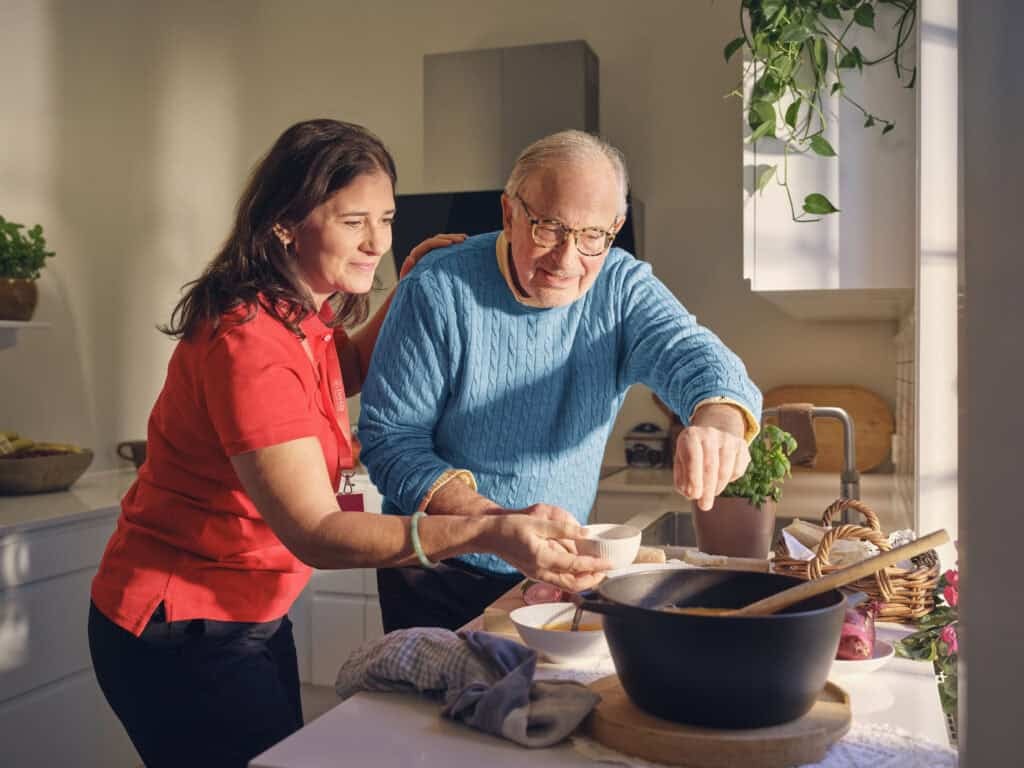
With live-in care, a professional caregiver becomes part of your household, handling the practical aspects of care while you focus on being present with your partner. The caregiver manages tasks like:
- Medication reminders and health monitoring
- Personal care assistance
- Meal preparation and household support
- Safety supervision and mobility assistance
- Companionship when you need a break
Importantly, you remain involved in all decisions about your loved one’s care. The caregiver works with you, not instead of you, creating what we call a “Circle of Care” that keeps you at the centre while providing professional support.
Real Benefits for Both Partners
Caring partners often report that live-in care gives them back their energy and patience. They can once again enjoy quality time with their spouse – sharing meals, watching favourite programs, or simply holding hands without the weight of care responsibilities.
For the person receiving care, having a professional caregiver can actually increase their independence. They’re less likely to feel guilty about asking for help and may feel more comfortable discussing certain health concerns with a trained professional rather than burdening their spouse.
Taking the First Step Together
Introducing live-in care doesn’t happen overnight. It’s a transition that works best when both partners are involved in the decision-making process. Many couples find it helpful to start with short respite periods, allowing everyone to adjust gradually to the new arrangement.
The goal isn’t to change your relationship – it’s to preserve it. Live-in care provides the support structure that allows your partnership to thrive despite health challenges.